


Speed and reliability of holsters
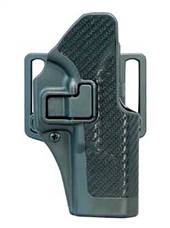 I have noticed a trend of CCW individuals that are all going out and picking up the Blackhawk Serpa style holsters for CCW. Many of these are Glock owners. I often ask some of these people what they thought about the 1911 pistols and recently busted on a friend that referred to them as relics because they had a manual safety, I followed up on what he thought about putting a safety on his Glock and he smiled and said “what safety”. I pointed to the gun holster he was wearing and said “you have a safety on your holster”, and his face dropped.
I started asking him about how many times he’s actually practiced drawing from the holster and if he thought he might have problems retrieving the gun if it was under cover. These are my opinions, but I always like to challenge people when they are showing signs of going with “the newest thing” mentality and it happens all the time with gun holsters. I would highly recommend the Blackhawk Serpa holster for OWB or duty carry, but highly argue against using them for CCW. If you practice enough you can overcome the thumbsnaps ect. that a gun holster may have on it, but are you more likely to fumble on a particular design when CCW under cover? Just something to think about.
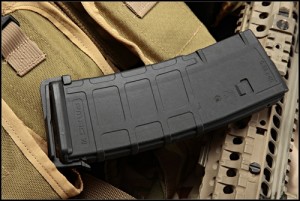 I first stepped into the world of tactical carbines after years of toting around an M16A2 for close to 10yrs. We basically had to clean and maintain our firearms daily when deployed and I often wondered what we might have been able to do during the day if we didn’t have such a high maintenance rifle. Looking back, I realized there wasn’t much else to do and this was something that we did to just occupy time. The M16A2 is not a very clean running firearm, but it can go for hundreds if not thousands of rounds without cleaning if it was lubed correctly from the beginning. In all of my years of service with the M16A2, and the years standing next to operators with AR15 rifles, I’d say 90% of malfunctions were bad magazines or improperly loaded, and bad ammo. The next was improper lubrication. It’s been a few years since I’ve been on the range during hunting season, but It was about 5yrs ago that I ran into an AR15 owner that said the key to running an AR15 reliable is to run it dry. Well, if you own an AR15 and you think this is true, I can’t help you.
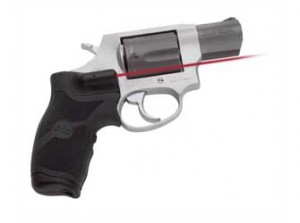 Why Laser Sights? Immediate Decisive AdvantageThe answer is short-and-sweet: Lasergrips provide you with instant and overwhelming advantages you wouldn’t otherwise have. Laser sights simply help you shoot better, with greater speed and accuracy, which translates into increased confidence—even in tense and threatening scenarios, when hours and hours of vigilant training can disappear in a haze of panic and confusion.
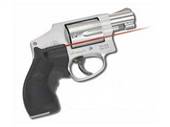 I’ve often noticed that some of the most experienced shooters I know that you would imagine could probable carry a Argentine FAL concealed actually all carry very small and lightweight firearms. The J-Frame seems to be the number one, but I have been noticing that there are a few very reliable autos being made by Ruger and Kahr. I understand the need for training, but there have been drawbacks to many of the snub nose revolvers I have fired. Number one, they tend to have terrible triggers and the sights are so small they are hard to use. I’ve put plenty of lead downrange, but I have done tests with 5 shot revolvers and the difference between double action trigger pulls and single can be significant. If you’ve only got 5 rounds, you have to make every round count.
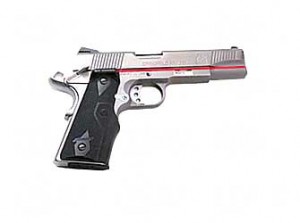 There has been much talk over the last 2 decades about lasers and flashlights being a liability to an operator more so than an asset. In about 45 seconds of teaching closer quarters combat and inside the home self defense, a laser is an obvious outing of a users location. I understand that if you are trying to sneak around your house and take out a threat, a laser that is turned on will tell the threat you are near. Flashlights run the same risks if they are used incorrectly, but try and tell a SWAT Team to enter a dark room and determine where a threat may be hiding and whether or not an innocent bystander is hiding in the dark.
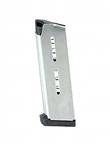 Every time I get asked a question about which firearm or accessory someone needs I follow up with the question “For what?” I have seen plenty of well trained concealed carry owners walk around with a 5 shot j-frame and none of them feel under gunned. The reality is that in some nightmare situation, you’ll never be full prepared, and sometimes we just have to be practical when we are CCW every day. For most practical purposes, I’d recommend keeping a spare magazine in your gun safe in your home, or keep one in your car if you don’t think you can comfortable carry a backup. When most of us are out and about, the ammunition you have on you is all you’re going to be able to fight with, but keeping something near your car and easily accessible in your home is a good idea.
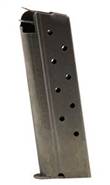 Although I understand that polymer guns are here to stay and they are far more technologically advanced than their early metal counterparts, I still enjoy shooting my 1911 handguns. The 1911s that are being made today are really several generations beyond where the guns that crossed the European continent and fought on the beaches of the Pacific. The best improvements I have seen in the 1911 design compared to the GI guns are #1 the pistol sights, and #2 the gun magazines. The GI 1911 magazines weakness seemed to be the followers. The slide stops were so heavy that many of the times the tabs on the magazine would bend and the slide would close on an empty chamber.
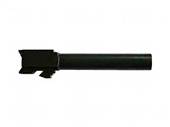 I think more than half the guns I have picked up for my collection were police trade ins. CDNN investments is always one of the best places to find used handguns. If you are a Glock, Sig or Beretta gun lover. Check out their yearly catalog for used but hardly shot guns. I picked up a Glock 17 a few month ago and like many of the guns that are trade ins, this gun had mostly holster wear on the outside. One of my friends got one that was much more worn especially around the barrel. While something like barrel wear has to be analyzed closely, it rarely is much of a concern to me. Many of the used firearms you find in gun shops probable have less than 500rds through them and the reason they look beat up is because of the holsters that they were used with and the fact the owner didn’t clean them very well.
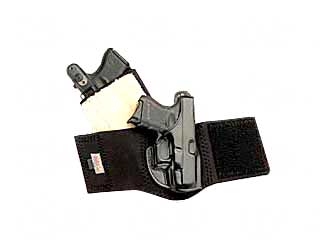
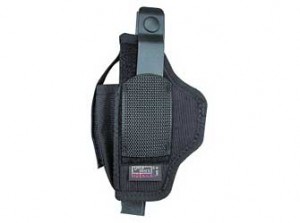 There is another consideration in choosing a holster that you may not be that concerned about at first. Many in the CCW world may frown on having any kind of thumb break or locking system, but there are good reasons for thinking about this. I would have to say that many of the thumbreak holsters that I have used in the past were nylon and although they worked very well for their intended purposes, I would never recommend them for CCW. I am also going to state that I am not going to tell you which holster you should use because that is a personal choice and you should put some thought and research into selecting for yourself. I have trained with 1911 pistols and although they are my favorite 45acp pistol, I have missed the thumb safety too many times during self defense training that I do not consider it for CCW. I’m also aware that putting a thumbreak on the holster may compound the problem for such a firearm.