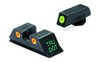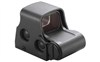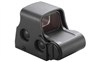
We get so many phone calls asking us basically asking us to tell people how to dress themselves when they get out of bed in the morning. Maybe 5% of the questions we get asking about tactical clothing and concealed carry clothing are about how someone will look in the clothing once they put it on. The same goes for gun holsters. People often ask us how they feel and how well they are made and all of this really comes down to your personal preference. I can give you a calorie count for every food item you eat, but you gotta tell me if you liked eating it.
Going through your house and pick out the type of clothing that you can wear all year long is probable impossible for you unless you live in a desert or the North Pole. Just like we need rain coats when it’s raining and winter coats when it’s snowing, we need gun holsters and clothing for changes in weather and seasons. Most people don’t carry a shoulder holster when they are living in t-shirt and flip flop land and nobody is going to tell you that you have to wear a leather holster in 100F temperatures. You have to find what feels right and works for you and then think about another scenario for the other things.
Just like the white lights that could only be mounted to trigger guards and the lasers that mounted the same way, gun manufacturers have been modifying their firearms so that can all be accessorized. It’s really easy to spot some of the older model Sig 228 and Sig 229 guns because they don’t have rails. Now it’s pretty much the law of the land to have a rail on your handgun because so many understand the need for using a white light. Just like everything that has to do with firearms and caliber debates, you have to know what the task at hand is and know what tools will work to get the job done.
I agree that the best place to put a laser is probable right inside the barrel and beam it out of the exact same spot the bullet flies out of, but right now that is impossible. Lasermax and Crimson Trace laser grips have different approaches to getting the same job done, and it’s really what your preference is. For close up fighting, once you get your laser setup for the ranges you wish to do combat training or defensive training in your laser will work, but side mounted lasers will become inaccurate once you get out of your comfort zone.
Ok, that was a dumb thing to say, but I still chuckle at one of my buddies comments whenever we’re on the long range. Reaching out and touching someone at 600yds is precisely what a sniper does. I have learned to notice that clarity of rifle optics but one thing that is becoming more and more of an experience is looking through all of the optics out there and their reticles. A long time ago, people were more concerned with the durability of the optic and making sure it wasn’t going to fog up on them when they took the scope caps off in the early morning when they went out chasing whitetails. Now some of your least expensive rifle optics don’t fog up.
I have a few Zeiss Conquest scopes that I’m quiet happy with, but I think I could go with less magnification on some of them. When you are trying to hit a 6ft target at 600yds, it’s really not that hard to see it. When people try and see an X on a 2ft piece of paper in their rifle scopes, that’s a whole other thing and in my opinion something not worth pursuing. I have walked off shooting ranges in the summer time because the mirage given off from the heat was so bad that it was completely impossible for me to even see a target at 100yds and testing my hand loaded ammunition would have been a waste.
I would have to say that the vast majority of those that have anything more than a flashlight and optic on the M4 are probable putting something on our guns that we really don’t need, but just enjoy having on. There’s nothing wrong with having an LWRCI upper with a quad rail or a MidWest quad rail if you think you can put it to use, but when we actually have to carry the Carbine for any real length of time, we’ll wish we could strip a few extra pounds of weight off the gun. Many of our Staff have been attending competition shoots lately that have been really well run. These events are everything from battle scenarios or even Zombie shoots.
Last year in Pennsylvania we attended a Carbine shoot where the the attendees has to sign in at 8am and once they left the club house, they couldn’t drop off any gear and had to lug it all with them for the day. All of the competitors were carrying M4 or AR15 variants and a few had AK rifles. Ammunition loads were approximately 400rds of rifle and 100rds of handgun ammo. I enjoy these events because we get too see some real hard use of tactical gear and tactical accessories. We tend to not see things fail at these shoots because the competitors are in the higher class as far as skill and the types of firearms they use. If you ever want to see what kind of optics work and which firearms and when things jam, go to a competition shoot at your gun club and sit back and watch.
I’m brainstorming with this blog post so give me some of your advice if you have any on what to put on my Ruger 10/22 rifle. This is a standard 10/22 and not a tricked out barrel or trigger. I purchased all of my 22lr for new shooters to learn on and didn’t want to get too fancy with optics in the beginning. After picking up a Marlin Model 980 bolt action and having the rear sight replaced with an adjustable elevation like the standard 10/22, I haven’t had the urge to buy another optic for this gun. Many bolt actions are capable of shooting quarter size groups at 100yds with the right kind of ammo, but even though my bolt action has that capability, I still wanted it for novice introduction to firearms.
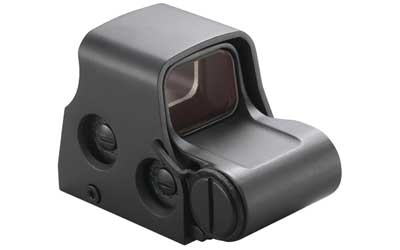
My ruger 10/22 was a training gun, but after recently doing some aggressive testing between the two, there was no comparison in accuracy. The bolt action was shooting dime size groups at 50ft and the Ruger was shooting 2 inch groups with the same ammo. I’m thinking about picking up a rifle scope for this gun that is either a fixed power or a red dot. I have a Butler Creek 25 round magazine that I have yet to test out, but it could be a good close quarters combat training tool for wiping out soda cans and other carbonated reactive targets. I had an Eotech 552 on a Ruger Mini 14 and had fun with it, but went back to a 3-9x40mm scope because it just seemed more practical.
I have to admit that I do read a lot of gun magazines, I guess it’s primarily to educate myself on what is out there as far as firearms and gear and see if there is anything ground breaking. I remember when I could name about 5 or 6 good gun manufacturers, but now there are so many people making AR15 guns that I don’t think I could really say that I have a very good point of reference if I was going to give my critisism because not all of the direct impingement guns are the same. There have been some productions with Springfield Armory XD guns when they first came out as well as a few others, but eventually the gun company gets it right. I have never seen so many holster modifications done in the last 2yrs as I have before. If you had a Sig 229 6yrs ago and get one now, and put a light on it, time for another gun holsters.
I guess the real question that we need to ask ourselves is do we want a tactical gun or a concealed carry gun? Even that can become complicated if we start putting lasers on them which many are doing for small frame revolvers and semi-autos. I took a training course using lasers and learned in the first 5 minutes that a laser has an extreme advantage over non laser guns with shooting around corners. Anyone that has taken a defensive firearms course has learned to use cover, and limit the exposure when shooting around a corner, keep your feet behind cover and try to only move the barrel and your eyes around the corner. With a laser, you can learn to keep your gun at one firing point and your head at another which gives your threat 2 things to think about if they want to return fire.
I think there is a difference between what a SWAT Team should be planning to use as far as accessories and gear and what Military personal should expect. I have had my fair share of experiences with combat rifle optics and optics that I would just consider for hunting that were very durable. I have never had a bad experience with an optic that cost me more than $200. I’ve had some optics that have been on my hunting rifles with 5000 or more rounds and I have never had a loss of zero. Although we all know that there are differences in the types of optics, most of us won’t have issues if we mount them properly. Most combat optics will come with a mount or already are a one piece unit like the Eotech rifle scopes.
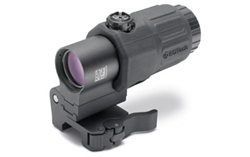
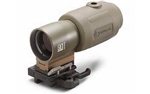
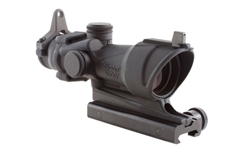
I prefer the Eotech optics for most fighting within 200yds. I have yet to pick up one of the G23 FTS magnifiers because I am waiting to find out if there is going to be a 4x version coming out. To me there is zero magnification and then there is 4x, and then I move up to 10x. I really find there to be no real reason to do the 1-3x or anything between 5-8x. The magnifer is an good idea for someone who already owns the Eotech and wishes they had an ACOG. You may think that is a funny thing to say, but it’s true. The Trijicon ACOG is a nice optic, but it does have it’s limitations in close up fighting and if you want to mount a red dot on top of the scope, you’ll be dealing with extremely high mounted optics for 30% more money.
Just like many of the options we have when thinking about selecting a firearm, caliber, holster, sights, rifle scopes, we have to do a little thinking ahead. We have to realize that there is such a thing as versatility, but nobody has a do it all scope yet. I think there is going to be a day when we have a rifle scope that is zero magnification at one setting and 40x at another setting with bullet calibration and computerization built into the reticle, but right now, that would probable cost too much to field these kinds of rifle scopes to the average citizen.
I have a Winchester Model 70 Pre 64 that I got off a family member for hunting when I was 17yrs old. At the time, the 3-9 Redfield scope was good enough for me to average 2 inch groups at a 100yds. As I grew older I slowly learned the tricks to cut my groups down and it wasn’t all about trigger control. Stock work and trigger tuning got this 2 MOA gun to being able to put 9 rounds in a 2 inch circle at 200yds. My Zeiss 6.5-20×50 gave me an edge for target shooting, but I realize it’s a little much for your average New York State white tails.
We highly recommend Streamlight Flashlights for home or street defense. LED technology has advanced so much in recent years that it truely is time to clear out your old flashlights and replace your home and travelling white lights. The TLR-1 is one of biggest selling handgun tactical lights and is easy to mount and easy to use. If you are looking for a light and laser combo, the TLR-2 tac-light is what you’re looking for. The Streamlight Scorpion PolyTac is a good companion for travelling or for mounting on your M4 Carbine. I highly recommend doing some training with weapon mounted flashlights and using a flashlight in your hand and firing a handgun.
When you are looking to mount a flashlight, I think it is worth considering if you are going to be CCW this weapon or just leaving it at home in a safe. I suggest that CCW should be low key, and putting a light on a gun is going to mean using a specific holster for the gun which will add bulk and limit the ways you will be able to carry. Carrying a Streamlight flashlight in your pocket or jacket is easy, especially if you are wearing a good CCW vest or jacket like Eotac wear securing spare magazine or knives and flashlights is easily done.
The .380 has now become one of the most popular CCW calibers. I guess so many people are now being awakened to gun rights that gun manufacturers are catering to their desires for smaller concealeable weapons. I’ve seen what the .380 caliber can do and in all honesty, the caliber is really a minimal caliber and you better do some real good thinking on how to effectively engage a target when you are carrying such a weapon. It still amazes me that to this day, 90% of the people I know that carry a firearm have had ZERO formal training. I would say that considering the fact that people are bigger today than they were 100yrs ago and that crack cocaine, PCP and other street drugs can make people bolder and stronger than ever, you better know that firing on a target until it’s down is something you better know about and not expect a one shot stop. I’m sure I may be pissing off a few “experts” in CCW, but if I am going to carry such a weapon, I’ll have the gun unloaded on target A and expect to be moving and reloading for the expected follow up shots.
There was a shooting in the Phildelphia area in the last decade where a female police officer was killed by a bg with a .380, but it was a point blank direct hit to the head. I hate to be so graphic, but that’s about what you’re going to have to expect this caliber to do. I have heard of bullets not penetrating the cranium and a full magazine of .380 holding 6-7rds should be expect to be used on a target. I’m starting to see some laser companies putting lasers on these small gun which IMHO may be a good idea to help in low light shooting. Crimson trace laser grips makes them for Walther PPK pistols which are one of my favorite .380 guns. I realize that many who carry a CCW may not consider themselves at high risk, but for anyone in a high threat or high risk job, should seriously consider a larger caliber. Depending on your body size, Kahr and Kel-Tec make some nice pocket 9mm that are closer to what I would consider to be minimal calibers for defensive use.