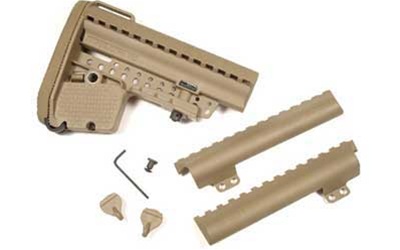
I always try to sit in on training courses whenever I can although I wish I had the time to actually take more classes. I’ve written on several occassions that one of my greatest joys of watching classes is watching all of the gear fall off or fail a student and watching their slow evolution of losing gear along the way. Theirs nothing wrong with being a tactical accessory junky, but if you have to carry an M4 all day like i’ve had to, you’ll quickly learn that lightweight, means a happy person. There seems to be a big craze getting tactical gear with the quad rails even though most people don’t need them, and then having to go out and get rail covers, when a simple stock would have lightend the gun by a few pounds.
Although I am a big fan of battle rifles and prefer to carry a gun bigger than an M4, if I gotta carry ammo on my person and it’s not being carried in the trunk of my car, I’ll gladly take the smaller caliber. The M1 Garand is a great and powerful weapon, but combat is at a much faster pace and being able to suppress a target with small arms is as important as neutralizing it. If you are a weekend warrior and are considering taking a Carbine Class, even though your training will take place in the Course, you should do research on gear and accessories before you walk in the door.
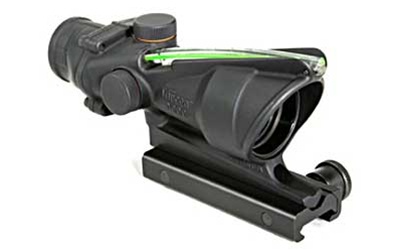
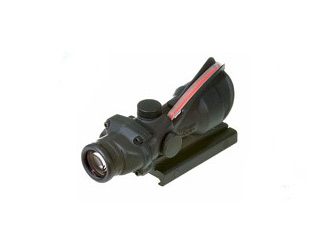
The vast majority of M4 Carbines I see at the range have optics that are top of the line. Aimpoint and Eotech along with the Trijicon ACOG are probable the top 3. All of these are good for a certain purpose which is mostly for close up fighting. The Trijicon ACOG is more of a medium range combat optic depending on the type of reticle you choose. They do have a line of red dot or even green dot optic options, also. If you are are a weekend warrior and new to defensive shooting and tactical gear, I would suggest you think about this next statement, whenever you attach an accessory to your Carbine, think about what you would do if that accessory mount broke or the actual item failed.
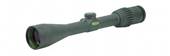
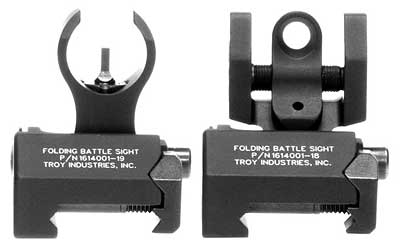
When you mount your rifle scope, please do some research on how to properly level and mount it. A properly mounted combat optic should not be over torqued and should have loctite on the screws. I have yet to see a mount come loose on a gun that used loctite. When you go out an spend $1000 on a combat rifle scope, ask yourself, what will you do and how will you remove the scope and aim it if the optic goes down. If one your Trijicon rifle scopes takes a bullet, are you going to be able to see through it and still be able to lay down effective fire if you can’t see through it? Even if you have a rifle scope that does not allow for co-witness, would it be a good idea to still attach flip up sights to the gun if there is room for them? Always have a backup plan for your defensive carbine.
There seems to be a new craze in competition shooting in recent years. I’ve seen more high school boys coming home from class with Zombie survival guides, the recent 28 Days later type movies and the doomsday virus outbreaks. I guess IDPA has lost some traction to the present generation, but I’ve attended a few Zombie survival competitions and they were very good training events. The best thing about it was the amount of tactical gear that I watched fail, and the number of really novice mistakes people made. Out of the 5 stages I attended, there was 1 stage that we saw about 18 firearms go down. About half of those were AK variants and they were mostly magazine related. Some guys never knew how hard it was to do a tactical reload on an AK if there was a round in the chamber and a fully loaded 30rd magazine. People found out what happens after firing off the 1st round and the magazine falls out.
Do search for gun clubs and shooting ranges in your State to find out if anyone is holding a Zombie shoot. They usually occur in the September to October months. Having some good tactical clothing that will securely hold your gear. The Eotac Style 201 pants are my favorite because they hold 6- 30rd PMAGS and they are easy to run in. Tactical vests like the Style 101 are not heavy and don’t make you feel like you are wearing a flak jacket. There is a time and a place for different types of tactical vests, but mobility is important. You may want to try getting your magazines loaded up with all of your gear and then try running 100yds with it and see what it feels like and if stuff starts to fly out of your pockets. Mobility is extremely important.
I’ve been involved with several gun clubs that ran various competitions. My favorites are always the Carbine events. Every year we get to see who the best shooters are and almost every year, the guys that show up with the most expensive guns are not the ones with the highest scores. If you got money to blow there’s no reason you can’t buy what you want, but operator caused malfunctions are the #1 reason I see guns go down.
I’ve had a love hate relationship with my Eotech rifle scopes. I love how easy the reticle is to pick up when shooting, but I hate how hard it is to nail targets beyind 100yds in low light because of how the reticle obscures the targets. I’ll never forget my first 100yd shooting experience with my Eotech where we were shooting steel plates. I couldn’t see any of the 3 inch plates with my Eotech at 100yds. The shade of the trees darkened the targets and when I shot with iron sights, I could clearly make out the plates. Battery operated optics are something that will surely go extinct in the not too distant future.
Just like every other accessory or firearm, there are pros and cons of any tool. The novice attitude towards firearms is that a certain firearm is better than another just because they spend more money on customization. I’ve seen guys with Kimber 45acp that couldn’t hit a plate at 15yds and guys with a Mil-Spec 1911 hit a plate at 100yds. There are always variables when it comes to accuracy and tolerances, but it’s more than likely all about the skill level of the operator.
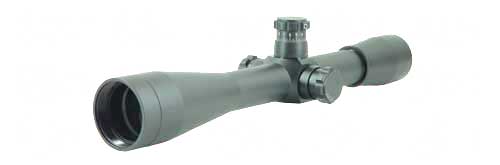
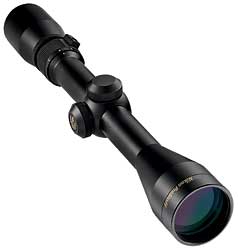
When you are discussing the topic of which rifle scopes are better than others, the real issue would be about the clarity and reticle type and the durability. I have read so much BS when it comes to rifle scope durability because most of that is from improperly mounted optics. I’d say 75% of the time I pick up a rifle that is not my own, the rifle scopes are canted or the rings are not loctited. If you don’t have a scope that is leveled properly, your hold overs are going to be shooting to the left or right of your target instead of dead on, high or low. You’ll have a heck of a time trying to practice your accuracy because your elevation adjustments will cause your windage to change. Reliability with an optic has more to do with how you mount it and lock it down than the price you paid for it.
I guess I feel fortunate that at the ripe old age of 42 I still don’t need to use glasses. I’m in the minority amongst my piers, but that still doesn’t mean I’m the best shot. Having good eyes doesn’t mean you have the best shooting skils either. There have been multiple times I have taken young maidens to the ranges and they out shot more experienced shooters, just because they didn’t jerk the trigger like their 25yr old male rivals did. Breath control and trigger control can do a lot for you whether you where glasses or not. I started out shooting with guns that had optics on them before I started shooting with iron sights. I feel that most shooters should start the other way around, but as long as you eventually undestand the skills behind each, all is well.
There is nothing wrong with skipping the whole 22LR training stages for novice shooters, that’s a call an teach, instructor or family member will have to make and the decision is theres. I personally believe a beginner training gun is an A2 20inch AR15 target rifle. The XM15E2 is a great shooting platform for anyone that wants to shoot with out using rifle scopes and depending on the personality and attitude, you can do quite well if you know your ballistics limits. The experience an operator is, the more they will acknoledge that when an optic goes down, you better know your irons or you’ll wish you did.
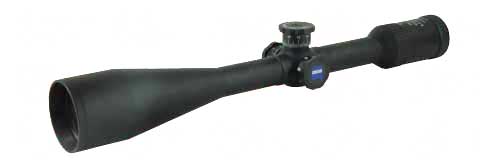
For most of the Northeast, hunting will start in about 6 weeks for archery and then small game begins. Archery has gained a lot of ground in this region because so much of the good hunting areas are populated and it’s hard to safely manage deer populations if areas where it’s not really safe to use a firearm. I still don’t know why so many people go with monsterous optics that when put under any kind of realistic hunting test, will always slow you down. Whenever I ask people what they are doing with a 50mm objective on a gun that is really meant for something that weights 800lbs and they are out hunting white tail, they usually say they are afraid of making bad shots.
From my own personal experience in the military and law enforcement community, I think hunting with a red dot is probable more practical than any optic that magnifies more than 5xs. For small game I’d recommend against using a red dot, but there have been times I’ve been tempted to just bring a Mini 14 with an Eotech out for while tails just because the speed I get with that configuration is better than any lever action or 7mm bolt action. Whenever you are thinking about doing long range shooting, go ahead with magnification, but wheneve you are thinking about rifle scopes for hunting applications, do a realistic gauge of how good your eyes are and what kind of opportunities you may expect when out in the field, and don’t slow yourself down with too much magnification or an optic that has an eye relief inhibits your mobility.
There are numerous reasons that your rock solid rifle optics will go down. Some optics use batteries which will always go down at some point. Your tough Trijicon ACOG will hold zero under most combat conditions, but a 30 caliber bullet can still dismount it. Reticles can come loose, rings can fail, glass can break and numerous other things occur in a fight that don’t normally happen with occassional hunting trips. Most rifle optics won’t handle real big drops, but having the ability to have a backup just incase the glass goes down. Co-witnessing your sights is a simple answer for those using rifle scopes and quick detach mounts in my opinion are worth considering. It has never happened to me in a hostile situation, but having a MOA rifle with broken glass that is solidly mounted on my rifle has got to be a nightmare sceneario.
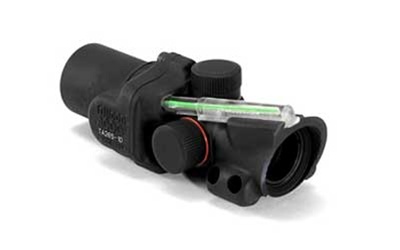
The Trijicon NSN has iron sights mounted on the top of the rifle scope which can come in handy in closer situations and are a less expensive alternative to mounted a red dot on your ACOG. That is worth the money if you are in the line of work that calls for it, but for general blasting and plinky, I think that $1800 optics is a bit much. The Eotech 512 is probable my recommended optic for an M4. I think people can get carried away with optics on the M4 because even though the rifle is pretty accurate, it really is not very powerful or effective past 200yds. With a growing selection of combat optics you can put on the AR15 type rifles, one other suggestion I have for shooters is to always keep your iron sights on the rifle. I’ve seen a few people show up at classes with just an Eotech mounted and they complained the front sight blocked their FOV. Well, taking a 200yd shot with an Eotech that has a dead battery is like parking a mini van from the furthest back seat.
Like many tactical shooting accessories, you have to put a lot of thought into which type of configuration you want on your Carbine before you spend the money or you will find out real fast you just spent $500 on some thing that you really didn’t need. The differences between using some of the fixed power Trijicon rifle scopes, Leupold CQT, and the Eotech 512 are considerable. Each can be used for many things with an advanced shooter, but they are intended for certain applications and within those boundaries, they work well. There was a shift away from the Trijicon ACOG for some military and law enforcement personel because once we invaded Iraq, and the house to house fighting went on for several years, the need for magnification was virtually unnecessary.
The Aimpoint and Eotech optics are hands down the most popular CQC optics being purchased or issued, but there are times when just a little bit of magnification would be helpful. If you are 100-200yds away from a potential target, being able to see what they are holding in their hands or see there faces is a big help. If you determine that they are a threat, then depress the trigger and get the job done. The Eotech magnifier is probable the most expensive magnification option, but it does the job if you think you may want the magnification. Once you factor in the cost of the Eotech and the magnification optic, you will have basically spent the same money as Trijicon ACOG rifle scopes, but there are still differences in what you can effective use each for. Think before buying and borrow your buddies rifles at the range before you spend the cash, if you do, you’ll get your moneys worth.
I remember the days when I would stare at rifle scopes and ask shooters how much they cost, and when they told me how the rifle scopes cost, I’d calculate that whichever rifle I was thinking about putting the scope on, the cost of the rifle was less than the cost of the optic. I have no idea how much money companies are making off of some optics, but there is a certain point that I really don’t care how good people think they are, 90% of people spending that kind of money on optics probable could get the job done with something that cost 50%-75% less. In all of my years of target shooting and plinking, I have only had scope mount issues and 2 rifle scopes that ever broke. Every rifle scope that broke cost less than $100. I have a few Leupolds that have been on bolt actions and semi-autos and they all hold zero and have excellent clarity.
If you do research on rifle scope manufacturers and there warranties, then put some thought into what kind of objective lense you think you want and get the reticle that applies to your shooting purposes. There are a lot of really interesting reticles being sold by various manufacturers and they work very well. Mil-Dot reticles still have their place, but some of the range estimation reticles for varmint and big game work very fast. Once you’ve determined which rifle scopes you want then get the best rifle mounts you can afford to get and remember to use loctite on every screw. I have had scope mounts fail on me, but never when I used loctite. For hard use optics I strongly recommend marking the heads of the screws so you can do visual checks to see if they are turning.