


The 6.8 SPC still not catching on
 I was never a big fan of the .223 or 556 caliber until I actually got off the bench and started doing real gun fighting. I started out like many, with a Russian AK variant which was extremely reliable, but when it came to target engagements out to 400 meters and for close quarters gun fighting, there was a substantial difference in hit ratio. Hit ratio was something that I never dealt with before because it was all about penetration and accuracy. Now I know that being able to shoot a reliable rifle doesn’t mean you are going to win a fight, it’s all about hits and who gets the hits first.
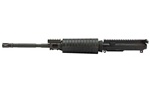
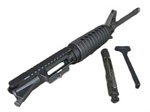
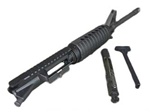
There have been times when an AK74 type of rifle has done almost as well or equal to an M4 Carbine, but the shooter has to have more experience in gun handling skills to keep up. I compared the close quarters hit ration of the 6.8 SPC and found it to be closer to a 7.62×39 AK than a .223 variant. CMMG upper receivers are something to be considered if you are looking to mess around with bullet calibers. Muzzle hop or flip will affect your accuracy and speed and that is something to be concerned about. Room to room and house to house fighting is something which occurs in seconds and putting 5 hits on paper is better more reliable at stopping a threat than one bad hit. Bullet penetration is also something that can be over blown when it comes to CQC because that is a bad thing in a hostage situation.
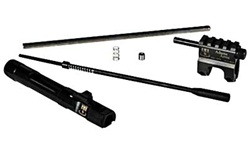
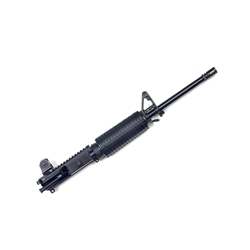
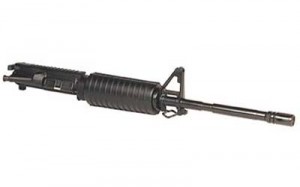 Even though the short stroke and other piston designs have come on the market, and these guns all operate much cleaner, the AR15s DI guns that are being fielded these days are far more reliable than the M16A1 that was issued in Vietnam. Designs and improvements of metalogy has been tremendous and this can be noticed just by feeling the difference between one bolt carrier and another. Another major point about why the AR 15 guns have caught on is that they are so ergonimically superior to most of the military style guns out there that they are easy teaching tools. I normally start people out with learning the fundamentals with a 22lr bolt action with iron sights, but when I’m dealing with an adult that is not afraid of recoil, a .223 A2 style Carbine is an excellent staring point.
 I had the opportunity to get out to the range again this week. I tend to bring the same bullet weights with me to firing ranges whenever I’m shooting my ARs because there can be really big differences in bullet trajectory when shooting out to 600yds. There is also a very big difference between bullet drift with just a few extra grains of weight. I’ve pulled the trigger on 150gr FMJ bullets out to 500yds that missed targets just depending on whether or not I fired during a wind gust or not. It’s really a lot of fun to shoot distances because you find out that it’s not all about how well you hold a gun down and how well you pull the trigger. Timing is something that really plays a factor when shooting into the wind. I use to shoot at a range that had a wind that blew from right from 100-300yds and when you got out to the 400-600yds, the wind blew from the left.
 There is much to debate when it comes to discussing the effectiveness of the 5.56 round. When it was originally deployed in the M16A1, the military had issues with the reliability of the gun, but I have heard not one complaint from any Vietnam vet about the lethality of the round. That was when the military was using a 20inch barrel with a 55gr bullet travelling well over 3000fps. The bullet is extremely violent at that velocity. The lethality of the round was greatly diminished when the military started using shorter length barrels and the 62gr SCBT also known as SS109 or M855. Although it is only 6grs heavier, the bullet is so well balanced that it basically zips straight through a target and the terminal ballistics are not very good below 2800fps which is practically what an M4 shoots it at near the muzzle.