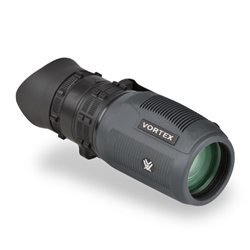
I’ve seen so many people on firing lines with spotting scopes complain about the optics they have and what they should have gotten or what they wish they knew before getting a scope. Sometimes people have this idea that having an optics magnify 45x will make things easier to see at great distances and any experienced observer know that isn’t true. Magnification can become void due to heat and mirage and even zero magnification can cause you to have trouble hitting an object at certain distances.
Expecting to see 22 Caliber holds at 600yds is a hard feat. One thing you may want to consider if you are expecting to use a spotting scope for long ranges is a different type of target other than paper. Shoot N C targets can help improve your visibility and avoid any frustrations in trying to pin point your point of impact on paper. They aren’t re-useable so you’ll have to expect to spend more money on them, but they work. Spottings scopes are as good as the money you pay for them, but make sure you know what you can realistically do with them before you select one.
In my many years of being on the firing line, one of the top tier rifle optics I see at the long distance ranges are Nikon Rifle scopes. Nikon has had a tried and tested line of optics that can be used for long distance accuracy, clarity and adjustability. Nikon rifle optics are reliable tools that I have first hand witnessed tack drive whenever the operator was up to it. Rifle scopes need to be clear and reliable when shooting long distances. The ability to hold zero becomes obvious when shooting beyond 100yds because those flingers at 100yds will be misses at 600yds if you don’t have a good scope.
Another thing to think about whenever looking for a good optic is clarity. Some people seem to think that high magnification is better for long distances, but it’s not true. There is something to be said for too high of magnification and even on dark rainy days, you may notice the difference between a cheap scopes ability to see in low light in comparison to higher end scopes. A good 3-9×40 scope can be better than a cheap 6.5-20×40 in low light.
Weaver rifle scopes have been around since the 1930s. I still hear people highly recommend using them on carbines or small semi-autos like the Mini 14. Weaver makes several types of rifle optics and some of them are applicable for long range shooting. Long range optics don’t have to be high magnification, but clear and accurate. With the proper scope rings, and the right kind of ammunition, your Weaver rifle scope will be capable of short and long range shooting.
The Weaver Tac-3-15×50 is a serious optic. Mil-Dots are used for range estimation and are still being used and taught in military sniper training. An optic like this will help you estimate an object hundreds of yards away and depending on the operator, reaching out and touching your target with be easy with the 3-15x magnification and the wide 50mm objective lense.
Optics have multiple purposes. They can be used for Astronomy, Scouting, birdwatching, target shooting, hunting and military purposes. With the emergency of combat optics for close quarter combat, scopes used on rifles have gotten smaller, more compact and sometimes have zero magnification. The point is to give you a good sight pictures and a reticle that is easy to follow.
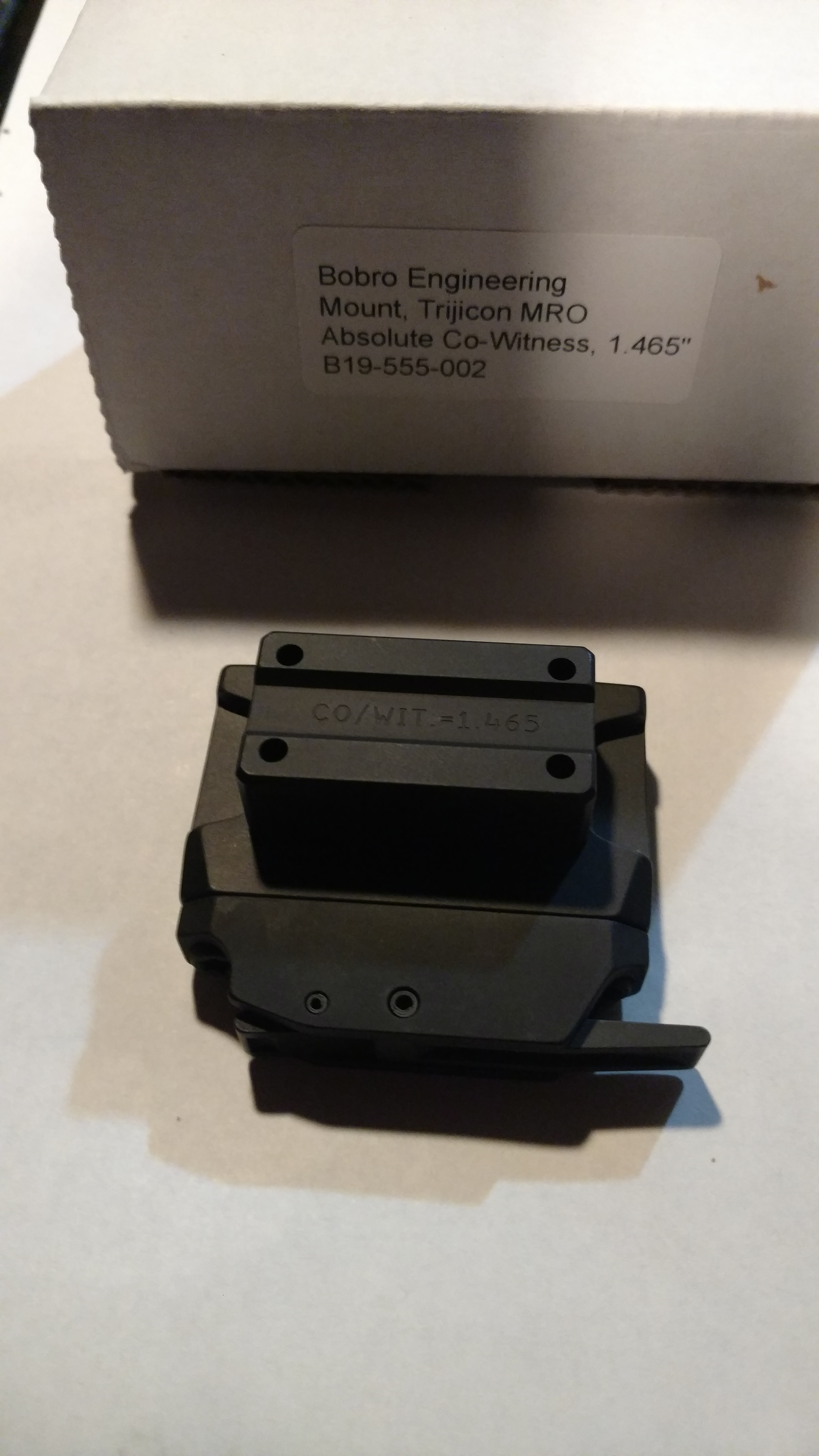
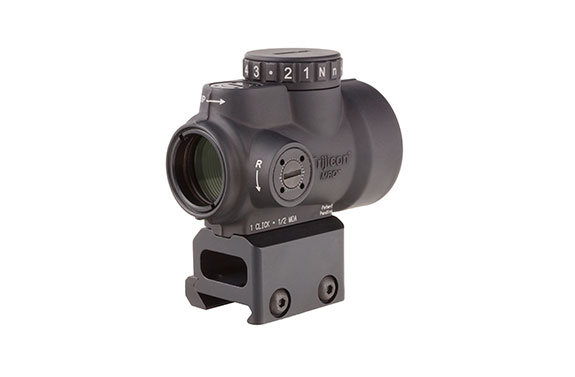
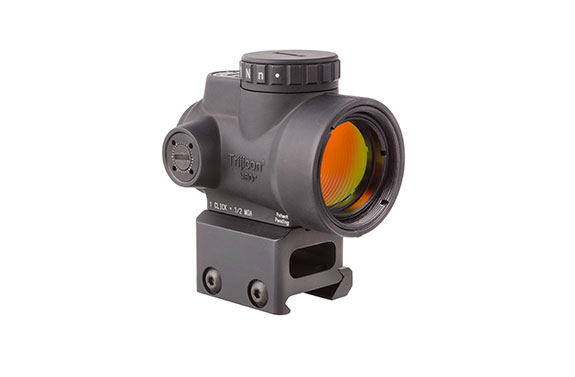
Many combat optics like Trijicon and Eotech are 4X or less. DMR or Designated Marksmen are using optics made from Trijicon, Zeiss and Leupold that are combat worth but higher magnification since shooting 300-600 meters is becoming the norm in places like Iraq and Afghanistan. Rifle Scopes are no longer made with the standard crosshair reticles and may even come in range finding or illuminated reticles.
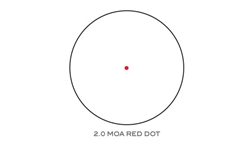
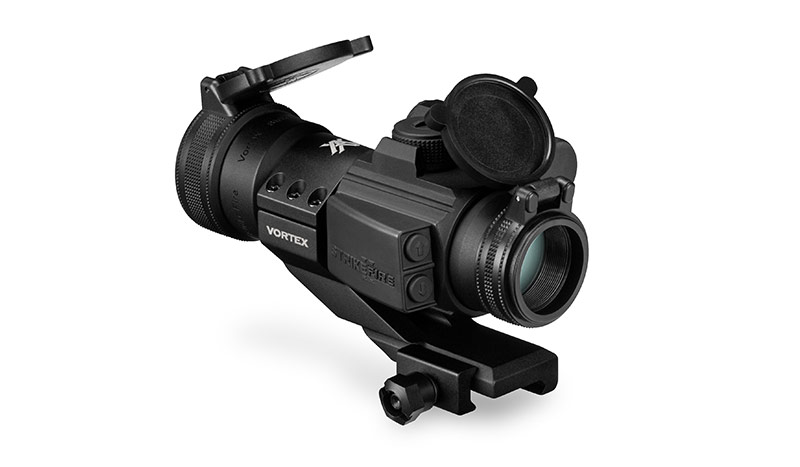
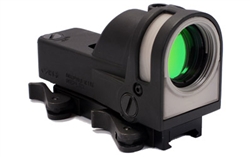
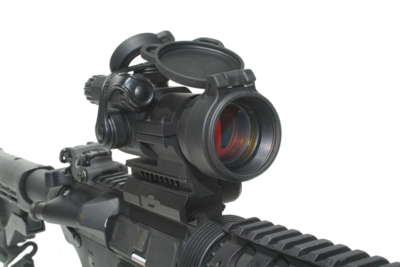
Modern combat optics are becoming more and more advanced. Back in the day people just used the European pole or standard crosshairs for rifle scopes, but not anymore. These days combat optics may be red dots, green dots, illuminated reticles, bullet drop compensators etched in glass or Mil-dots. Combat optics like IOR scopes may have a reticle that is almost a sizing guide for range estimation where you just simply hold the target into a range estimator and then make adjustements on your target knobs or just hold over.
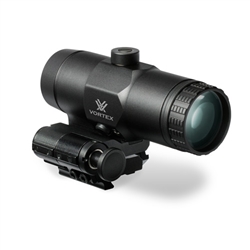
There is also something completely unique. Eotech holographic gun sights. These unique combat optics have a holographic gun sight that, once sighted in, will stay sighted in no matter how you view through your sight. According to many of those that we have spoken to in Iraq and Afghanistan, these are hands down the best CQB gun sight. With zero magnifation, you have the FOV that is unmatched by normal rifle scopes, and with that, comes faster target acquisition. The unique holographic gun sight looks like something that was used in aircraft gun sights. There are also options that can be used for some level of magnification so that identifying targets at greater distances can be done without compromising the close up speed that these optics give you.
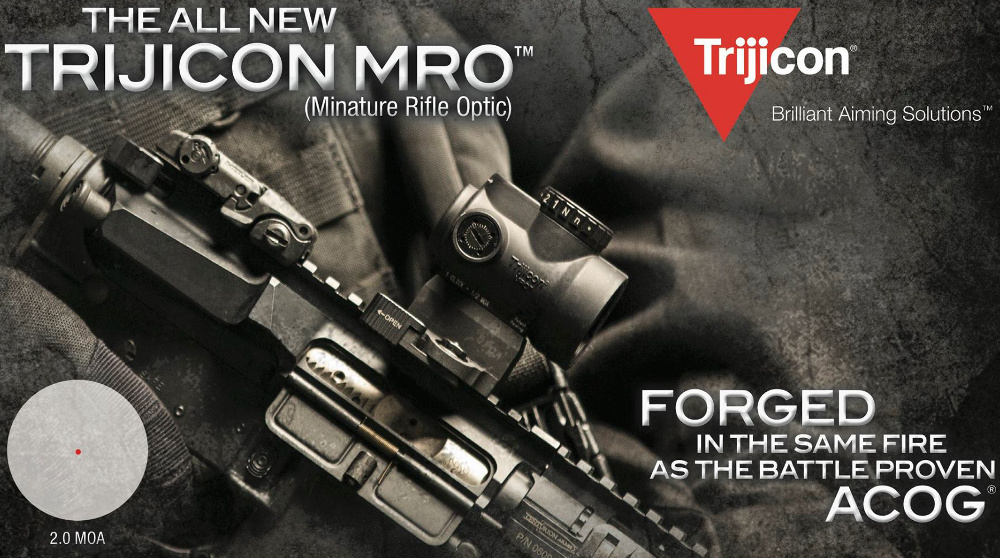
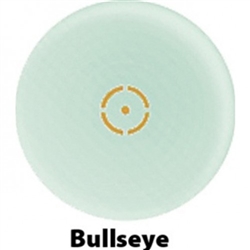
Trijicon optics are widely known for their Combat Carbine appeal. They are probable the most modernized military combat optic. Illuminated reticles make needing batteries void, and their wide variety of reticles give operators a versatility unmatched. Reticles can be used for CQB or for long range use. Some may want crosshairs or they may want a donut, triangle, green dot or red dot.
Trijicon has also diversified their optics for hunting and target shooting. The Accupoint optics are low-variable power optics that give operators some level of magnification, but still have the speed that Trijicon optics are known for. The Accupoint reticles come in red triangle, Amber dot, Green triangle, and green dot. These have started to show up on bolt action rifles and DMR used in the military. They are reasonable priced and all under $1000 dollars. Magnificatons can vary as well as objective lense.
We’ve all seen the massive accessorizing of firearms in recent years. Firearms likes SKS rifle and Mini 14s are not immune to the firearm attachements and modifications that have run rampant in the AR15 community. In my opinion, there are a lot of firearm owners out there that had their Legos taken away from them and they brought that mindset into gun accessorizing and tactical gear stockpiling. That’s about as harsh as I can be about why people do what they do to their firearms, but some of it is for hobbie reasons, some for practical reasons, and some because people have the obsessive compulsive behavior of needing to spend money.
There area a lot of good upgrades one can do to a firearm, a fighting rifle should be customized to fit an operator. Advanced Technology makes some quick and easy upgrades for your shotgun or carbine that can give you better grip or balance. Shotgun shell holders on the buttstock or riding side saddle is a practical tactical upgrade you can do on your remington 870. The fiberforce stock for the MAK90 is a way to legally get around some firearm bans and are a big step up compared to the stupid thumbhole stocks. Attach a rifle sling that fits yoru purpose from Blue Force Gear, they come in 1 point, 2 point and 3 point attachements. Minor firearm modifications make need to be done to attache rifle slings, but do some research on various rifle sling configurations to see what works for you.
I’ve spent enough time on the internet gun boards to hear all of the squabbling about the Mini 14 Ranch rifles. The short answer on Mini 14 accuracy is this, they are good for what they were originally intended to be used for, and that was to be used for “a few quick shots”. The Mini 14 Ranch rifle is highly recommended for those in Coyote Country or for varmint hunting. They are light and can easily accomodate 30-40mm rifle optics. While we are aware that the .223 has long range capablilities, I highly recommend something in the 3-9×40 power. You can the wider objective and some amount of magnification.
Bushnell rifle scopes options can vary from 1.5-4.5×32 to 4.5-30×50mm. The smaller the objective the darker your view will be, but we also acknowlege that you pay for what you get. Bushnell optics have been around for a long time and are defanitely rugged enough for most hunting and target shooting purposes.
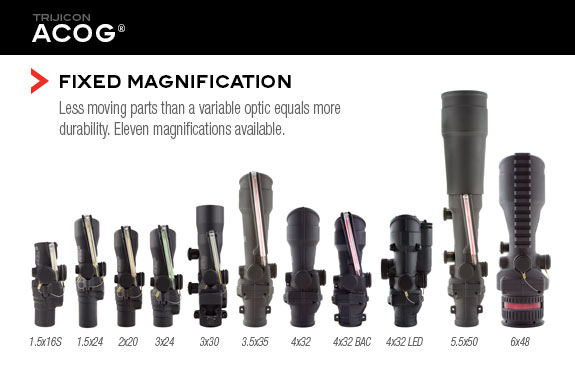
Trijicon ACOG optics are hands down the most widely used combat optic used by our military. There is a reason for this. ACOGS also known as Advanced Combat Optic Gunsights don’t need batteries, give you low light illumination, fixed magnification and models like the TRTA01-ECOS gives you fast up front CQB options and long range shooting in one package. Like all optics being used today, nothing is good for everything, but technology is moving away from battery powered optics and Trijicon has been on that pursuit for over a decade.
The closest competitor we have seen on the market is the Eotech style optics. These seem to still gain a lot of attention for house to house fightingi and close range shooting, but outside of 100yds, the Eotech reticle will most likely obscure a target. If you’re picky about rifle recticles, you’ll have quite a few options to pick from with the ACOG. Reticles come in red, yellow, amber and green. They are crosshair, donut, Chevron or German style reticle. There are a few optics that like the Accpoint that are even widely used in the hunting market.
Hopefully I don’t sound demeaning in calling Tasco riflescopes a plinkers scope, but I gotta be honest. They are. and they are possible one of the best starting scopes any shooter can begin with. Riflescopes can cost in the thousands of dollars, but not everyone needs a combat optic that can see the rings around Neptune.
Some of the Tasco optics can in a 1″ or 3/4″ tube so make sure you put some thought into what kind of size you need and get the proper scope rings. Tasco Pronghorn Rifle Scope 3-9X 40 30/30 Matte 1″ is a great scope to start out with. There are a few tasco riflescopes that are good for Varmint hunting, too. The Tasco Target Rifle Scope 6-24X 42 Illuminated Mil-Dot Matte has an illuminated reticle for even more possibilities.